INDICATION: TAVNEOS (avacopan) is indicated as an adjunctive treatment of adult patients with severe active anti-neutrophil cytoplasmic autoantibody (ANCA)-associated vasculitis (granulomatosis with polyangiitis [GPA] and microscopic polyangiitis [MPA]) in combination with standard therapy including glucocorticoids. TAVNEOS does not eliminate glucocorticoid use.


TREATMENT PERSPECTIVES®
ANCA-associated vasculitis (GPA and MPA) is a group of chronic autoimmune diseases that affect vasculature throughout the body1-3
Test your knowledge of severe active GPA and MPA

QUESTION:
Which of the following is true of patients with ANCA-associated vasculitis (GPA or MPA)?4-7
YOUR ANSWER:
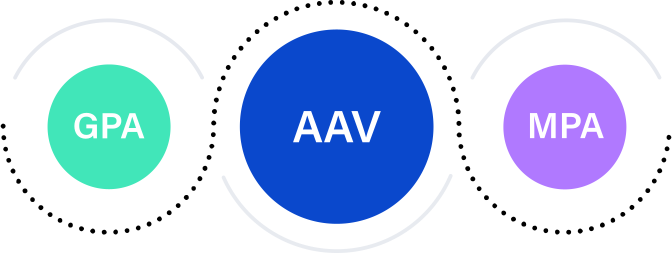
GPA and MPA are part of a rare group of small- to medium-vessel vasculitides called ANCA-associated vasculitis, or AAV.8-10
- An AAV diagnosis can be made in part through the clinical assessment of impaired function in one or multiple organs11,12
Severe vasculitis is defined by the American College of Rheumatology/Vasculitis Foundation (ACR/VF) guidelines as having life-threatening or organ-threatening manifestations. This is inclusive of multi-organ and localized symptoms.13
- Approximately 80% to 90% of patients with AAV present with renal or other organ-threatening disease activity4
ACR/VF guidelines define “active” as new, persistent, or worsening clinical signs and/or symptoms attributed to GPA or MPA, and not related to prior damage.13
For adult patients living with severe active ANCA-associated vasculitis (GPA or MPA), disease burden remains high.
Even with standard therapy, some patients may continue to experience symptoms13,14
Despite advancements in therapy, patients grappling with these chronic conditions still suffer from a long journey to diagnosis, a high risk of relapse, treatment-related toxicities, and a diminished quality of life.2,3,15-17
- Treatment regimens can carry risk for toxicity5-7
- Commonly used treatment options such as glucocorticoids can still pose serious risks, even at reduced doses14,18

- The attainment of sustained remission remains an elusive goal for many patients2
- In a recent clinical trial, the 5-year relapse rate for patients who received rituximab as maintenance therapy for 18 months* was 35% (23% for major† relapses and 12% minor relapses‡)14,18
Patients in the clinical trial were treated with combined glucocorticoids and ‘pulse’ IV cyclophosphamide to achieve complete remission before being randomized to receive either azathioprine for 22 months or rituximab for 18 months as maintenance treatment. In this trial, prednisone was started and tapered gradually and maintained at a low dose (5 mg) for at least 18 months after randomization.18
Major relapse: reappearance or worsening of disease with BVAS >0 and involvement of at least one major organ, a life-threatening manifestation, or both.18
Minor relapse: reappearance or worsening of disease with BVAS >0, not corresponding to a major relapse but requiring mild treatment intensification.18
LEARN MORE ABOUT TAVNEOS® (avacopan) AS AN ADJUNCTIVE TREATMENT OPTION FOR YOUR APPROPRIATE PATIENTS WITH SEVERE ACTIVE GPA OR MPA
